- Key Takeaways
- How the Buying Order Works
- Machine 1: A One-Man Gas Auger for Real Estate Sign Posts
- Machine 2: A Water-Fed Pole With a Pure Water Tank
- Machine 3: A Snow Plow
- Machine 4: A Tailgate Salt Spreader
- Machine 5: A Hydroseeder
- Machine 6: A Hot Water Pressure Washer Skid for Fleet Washing
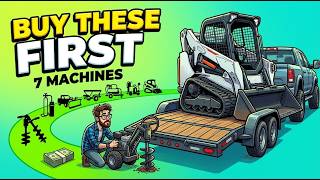
- Machine 7: A Mini Skid Steer With an Equipment Trailer
- The Honest Part: Machines Do Not Find Customers
- Watch the Full Video Walkthrough
Every time a house hits the market, someone is paid about fifty dollars to put the sign in the yard and pull it when the house sells. That small, unglamorous job is the starting point for a set of boring business ideas that all run on a pickup truck. The plan is to buy seven machines in a specific order, so that the cheapest machine with the fastest payback goes first and whatever it earns buys the next one. None of it is a sure thing, and nothing here is guaranteed, but the sequence shows how a pickup truck and about a thousand dollars could grow into a year-round, machine-driven income.
This guide walks through each machine in buying order, what customers already pay for the work, how many jobs it takes to pay the machine off, and the beginner mistake that quietly eats the first paycheck. Every price comes from a retailer listing, a dealer listing or a published price guide, and prices change by town. This is for educational purposes only and is not financial advice.
Key Takeaways
- The rule: the cheapest machine with the fastest payback goes first, and its earnings buy the next one. Only machine one comes out of the starting cash of about a thousand dollars.
- The seasons hand off. When one machine goes quiet for the year, the next one wakes up, so the sequence starts in November and runs to the next summer.
- Every machine has two ways to earn: homeowners, or the boring supplier behind a business that already has the customers (brokerages, property managers, home builders, truck fleets, landscapers).
- The last machine, a mini skid steer with an equipment trailer, bills the most per day but costs more than the whole starting budget, so it is bought only with what the first six earned.
- A machine does not find customers. Before buying any machine, check who already pays for the work near you, what they pay now, and what would make it fail in your town.
How the Buying Order Works
The logic is simple. Start with the machine that costs the least and pays back the fastest. Use the profit to buy the second machine, then the third, and so on. Because this is a truck, the work follows the calendar: sign posts and storefront windows in the fall, plowing and salting in winter, hydroseeding in spring, fleet washing through summer, and finally dirt work with a mini skid steer once the first six machines have funded it.
If you like this style of thinking, our guide to 6 boring businesses that make money for under $500 to start covers an even lower-cost starting point.
Machine 1: A One-Man Gas Auger for Real Estate Sign Posts
A one-man gas auger is a small motor with two handles and a big drill bit that bores a hole in the dirt. It sounds like something you would borrow for one fence post, but every for-sale sign sits on a post. Somebody digs that hole, and when the house sells, somebody pulls the post.
Realtors in one long online discussion said they pay roughly forty five to seventy five dollars for a sign to go up and come back down. One agent said building a post runs about seventy five dollars, which is why so many hire it out.
There are two ways to earn. Way one is homeowners selling on their own who want the yard to look like a real listing. Way two is the supplier play: instead of chasing agents one at a time, go to the office manager at a brokerage. One office means a whole room of agents, and every new listing is another post in the ground.
A one-man auger from a brand like Southland or Earthquake runs about two eighty to three eighty new. At around fifty dollars a sign, that is six to eight listings and it is paid for.
The beginner mistake: pricing by the trip. The same realtors said twenty five dollars a trip only works when the signs are close together. Drive across the county for one post and you worked for free. The fix is to charge a travel fee outside your zone, batch the installs into one loop a day, and call 811 before every hole. It is free.
Add a few posts and a first month of liability insurance, which Insureon says averages about forty five dollars a month for a small business, and there is still cash left from the thousand. This is the only machine the starting money buys.
Machine 2: A Water-Fed Pole With a Pure Water Tank
The second machine works the same streets but looks at the windows instead of the yard. A water-fed pole is a long pole with a brush and a hose, paired with a tank of resin that strips the minerals out of tap water. Pure water dries without spots, which is the whole trick. You scrub the glass from the sidewalk, rinse it and walk away, with no ladder and no towels.
Every storefront on Main Street has its name painted on a window, and dirty glass makes a business look closed. Jobber and Housecall Pro, two software companies for service businesses, put a small storefront at about twenty five to seventy five dollars a visit on a regular route. Housecall Pro puts homes at about one fifty to four fifty a house. The supplier route is the property manager behind a strip center: a row of storefronts, with one stop every two weeks, all year long.
The beginner mistake: pricing a tiny shop by the pane. Window cleaners on Reddit mention coffee shops at three dollars and fifty cents a side, which sounds fine until you count the drive. One cleaner in Southern California uses a seventy five dollar minimum per stop. The fix is one flat price per visit, with a minimum.
A starter pure water tank kit from a supply house runs about five hundred fifty dollars, and a complete entry kit with the pole is closer to fourteen hundred. At around fifty dollars a stop, the starter kit pays for itself in about eleven visits, which is one small route in one month. That route money buys machine three right before the first snow.
Machine 3: A Snow Plow
Everybody up north has a buddy with a plow, and that is exactly the point: every lot in town needs one every single storm. Jobber's snow pricing guide puts a home driveway at about thirty to seventy dollars a push, and a season contract for a driveway at two hundred to six hundred. Another snow pricing guide puts small commercial lots at about one fifty to three hundred dollars a push.
Way one is driveways on your own street. Way two is the property manager whose windows you already clean. He has your number, and he wants his lot open by seven.
The beginner mistake: plowing on a handshake. After the first big storm, nobody agrees on what was promised. The fix is a written contract with a trigger depth and a price for each band of snow. Schill, a landscaping company, publishes terms with a two inch trigger. The liability policy should name snow and ice, and Insureon puts the average for snow contractors at about one hundred thirty two dollars a month. That is not a cost, it is the ticket into commercial lots.
Meyer builds straight blades made for half ton trucks. RealTruck puts manual plows at about nine hundred to sixteen hundred dollars new and hydraulic ones at twenty eight hundred to six thousand. Used ones show up for less. At two hundred dollars a push on a small lot, a sixteen hundred dollar plow is eight pushes. One real storm across a few lots and it is paid for.
Machine 4: A Tailgate Salt Spreader
A tailgate salt spreader is a plastic hopper with a spinner underneath. It sounds like an accessory, but it is actually a second invoice. A plow clears the snow but not the ice, and property managers usually pay for salting separately, every single application.
Ninja De-Icer, which sells de-icing products, puts small lots under an acre at about eighty five to two hundred fifty dollars an application, and sidewalks at twenty five to two hundred. Homeowners with long driveways and icy front steps are way one; the same managers, sidewalks and storefronts are way two.
The beginner mistake: throwing the salt in for free. After a long plow night it feels generous, but it is margin bouncing out the back of the truck. The fix is one line in the contract: salt is billed per application, every time the spinner turns.
SaltDogg's eight cubic foot tailgate spreader is rated for half ton trucks, and one authorized dealer lists it at around thirty one hundred dollars. The salt itself is cheap: Home Depot sells a fifty pound bag for about nine dollars, and bulk runs around a hundred twenty a ton. At about one fifty an application, that is roughly twenty applications to pay off the spreader. Then the snow melts and both winter machines go quiet.
Machine 5: A Hydroseeder
That is when the fifth machine wakes up. A hydroseeder is a tank with an engine and a hose that sprays seed, mulch and fertilizer as one green slurry. It looks like a cement mixer that took a wrong turn, but most new houses finish with a yard of plain dirt.
Finn, a company that builds these machines, says hydroseeding usually runs six to twenty cents a square foot, and small yards run twenty to twenty five cents. HomeGuide and LawnStarter land in the same range. Finn's own example is a five thousand square foot lawn for about a thousand dollars: one lawn, one afternoon.
Homeowners staring at a bare yard are way one. The home builder is way two, with a row of new houses and dirt in every yard. The realtor from machine one knows exactly which builders are listing.
The beginner mistake: quoting the seed when the yard needs dirt first. Hydroseed does not include grading or topsoil, and on Reddit homeowners report quotes of fifty five cents a foot and up once topsoil is added. The fix is to walk the yard first and price the prep as its own line.
Turbo Turf lists a three hundred gallon skid unit at about sixty two hundred to eight thousand dollars, and loaded it weighs around thirty one hundred pounds. That is more than a lot of half tons are rated to carry, so check the sticker in your door or buy the trailer version. Turfmaker puts materials, even with a rented machine, at forty to one hundred dollars per thousand square feet. That leaves roughly five hundred to eight hundred from a thousand dollar lawn before fuel, so about eight to sixteen lawns pay for the machine.
Machine 6: A Hot Water Pressure Washer Skid for Fleet Washing
Machine six is not the little patio kind of pressure washer. It is a diesel-fired hot water skid that heats the water for road grime and grease. Pressure washing sounds like the most crowded business on earth, and for houses that may be true. For truck fleets, not so much. Every box truck and service van with a company name on the side is rolling advertising, and a dirty one makes the whole company look sloppy.
A twenty twenty six fleet washing guide from Prime Pressure Clean puts box trucks at about twenty to thirty five dollars each on a fleet contract and a semi tractor at twenty five to thirty five. The same guide says a twenty five truck fleet, washed weekly, comes to about six hundred fifty to fourteen hundred fifty dollars a week. Most fleets start every two weeks, with a minimum of two fifty to five hundred dollars a visit.
Way one is the owner-operator with one rig. Way two is the fleet itself: the bakery's delivery trucks, the contractor's vans, and the builder whose lawns you just seeded.
The beginner mistake: underbidding by the truck. Hydrochem, a company that sells wash systems, warns about exactly this and suggests pricing by the man hour instead. A trailer that takes an hour costs you an hour. The fix is a per-visit minimum plus a per-truck price. Also check your town's rules on where the wash water goes.
A dealer in Pennsylvania lists a hot water unit with a diesel burner at about eighty six hundred dollars, and a three hundred gallon tank adds about six to seven fifty. One weekly fleet of twenty five trucks covers all of it in roughly six to fifteen weeks, before soap and diesel. It is steady money, all year.
Machine 7: A Mini Skid Steer With an Equipment Trailer
By summer the earnings are buying the last machine, the one that bills the most per day of all seven and is completely out of reach on day one. A mini skid steer is a stand-on loader about the size of a riding mower, like a Toro Dingo. It digs, grades, carries and drills, depending on what you bolt to the front.
Dirt work may sound like a job for a big tractor, but not for a driveway. Every gravel driveway grows potholes. HPC North Georgia, a grading contractor, puts regrading a twelve by one hundred foot driveway at about twelve hundred to thirty five hundred dollars, and HomeGuide puts grading at one to three dollars a square foot. Skid steer operators on Reddit quote about one twenty to one fifty an hour, or around twelve fifty for a full day.
Homeowners with a washed-out driveway are way one. The landscaper and the builder are way two: they need a machine and an operator for one day, not a machine payment for five years.
The beginner mistake: buying the machine and forgetting the trailer. Toro lists the Dingo at about twenty nine hundred pounds, and a Big Tex equipment trailer weighs about three thousand more, empty. Ford rates the F-150 at up to thirteen thousand five hundred pounds with the right engine, while the smaller engine tops out at eighty four hundred. The fix is to match the trailer, the tow rating and the tongue weight to your truck before you sign anything.
Here is why it comes last. Listings for a Toro Dingo TX 1000 run from about fifteen thousand dollars to over forty five thousand, and an equipment trailer adds about five to seventy five hundred. Call it twenty thousand, all in. At twelve hundred to thirty five hundred a driveway, that is roughly six to seventeen driveways. To test the work first, Home Depot rents mini skid steers for about one twenty to two seventy five a day.
The Honest Part: Machines Do Not Find Customers
You would never buy the skid steer with a thousand dollars. You would buy it with sign posts, storefronts, snow, salt, seed and trucks. But a machine does not find customers. The auger does not walk into a brokerage, and the plow does not write its own contract.
Before buying any machine on this list, check three things:
- Who already pays for this work near me?
- What are they paying right now?
- What would make it fail in my town, such as a dry winter or a builder who stops building?
If all three answers hold up, the machine is just a tool for a customer who already exists. The first step does not need to cost a dime: call one real estate office, ask who puts in their sign posts, and ask what they pay. Even a disappointing answer is a win, because you learned what your town pays before buying anything. For a similar low-cost, truck-based model, see our breakdown of how to start a junk removal business.
Before taking paid jobs, check your city's business license, insurance, call-before-you-dig and wash-water rules, and check your truck's payload and towing ratings before loading or towing anything.
Watch the Full Video Walkthrough
Want to see the full buying order laid out machine by machine? Watch the video 7 BORING Machines I'd Buy First If All I Had Left Was a Pickup Truck on YouTube for a visual walkthrough of the prices, payback math and beginner mistakes. Which machine would you put in the truck first? Tell us in the comments.